Centrifugal compressors are widely used in the oil and gas and power generation industries.
Centrifugal compressors are widely used in the oil and gas and power generation industries. This article will explore the working principle, components and industrial applications of
centrifugal gas compressors in depth
Working principle of centrifugal gas compressorsCentrifugal gas compressors are a dynamic compressor that increases the pressure of gas by giving kinetic energy to the gas through the rotating impeller blades. When the gas enters the compressor, the centrifugal force carries it outward from the impeller, causing the gas to accelerate through the compressor. The high-speed gas passes through the diffuser, where the kinetic energy is converted into pressure.
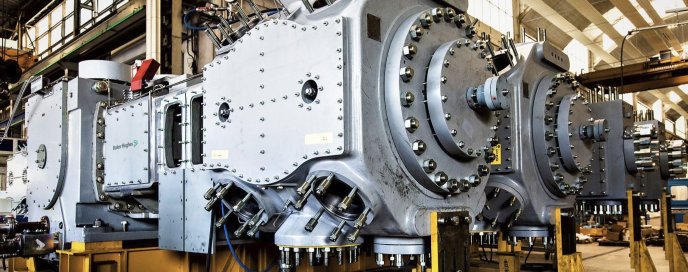 Components of centrifugal gas compressors
The conventional components of centrifugal gas compressors include: impellers, diffusers and rotating shafts.
Impellers
The impeller is the main component of the centrifugal compressor and is responsible for accelerating the flow of gas. It converts the mechanical energy of the motor into kinetic energy, causing the flowing gas to accelerate as it rotates.
Diffusers
The diffuser is a component inside the gas compressor that converts kinetic energy into pressure energy in proportion.
Rotating shafts
The rotating shaft connects the impeller and the motor to rotate the impeller.
Main applications of centrifugal gas compressorsCentrifugal gas compressors are widely used in industries such as oil and gas, power generation, etc.
Centrifugal gas compressors are very effective for large-volume gas delivery, achieving high flow rates while maintaining continuous pressure delivery. They are essential components for air separation units and gas pipelines.

