Before buying air compressors, you should understand some basic performance parameters of air compressor.
Before buying an air compressor, you should understand some basic performance parameters of the air compressor so that you can choose a high-performance
air compressor that suits your current needs.
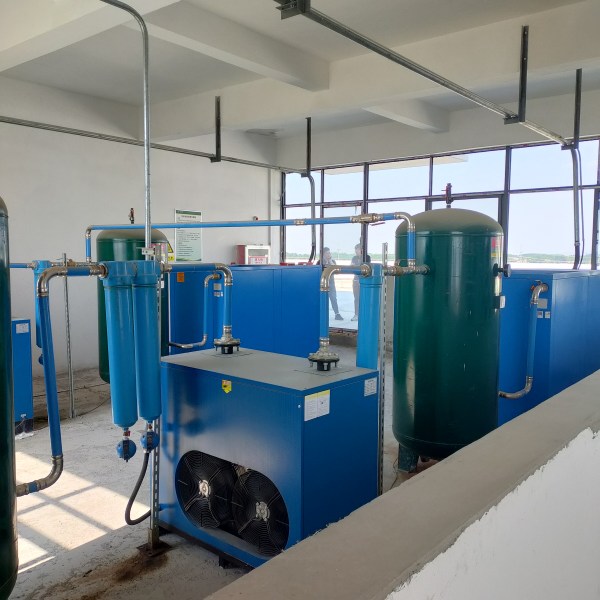
Basic parameters introduction
1. Exhaust volume
The volume of compressed air output per unit time, m³/min or
CFM.
2. Working pressure
The stable gas pressure output by the air compressor, in psig or Bar
3. Power
The input power of the drive motor or diesel engine, expressed in kw or HP
How to understand these parameters is crucial to choosing the right and operating compressed air system. Next, I will give a brief explanation:
Air compressors can generally provide
CFM flow. The total
CFM performance that any air compressor can provide depends on the actual pressure required for your workshop production application.
What is the
PSI of pneumatic tools? Generally speaking, pneumatic tools require a larger PSIG and do not require much flow.
When purchasing an air compressor, generally 2~3 measurements are required to plan your compressed air system. Not interchangeable. And it is impossible to convert one measurement to another.
Next, I will start with flow.
Flow
Flow defines the amount of air consumed by the air compressor. The unit cfm is used to specify the amount of compressed air flowing through the system. Other commonly used terms internationally include m3/min and L/min.
CFM is a unit of measurement for the volume of compressed air produced by the compressor. Most production equipment will specify the CFM required.
Applications that require high flow
When production only requires blowing and cleaning, more compressed air is required, but relatively low pressure is sufficient. Applications are as follows:
1. Production wastewater treatment
2. Textile processing Blow air to equipment to clean debris, etc.
3. Powder and resin delivery, etc.
Flow is not the only consideration. The pressure required by individual tools also needs to be considered.
Pressure (or PSIG)Pressure (or PSIG) is the driving factor behind service flow. PSIG stands for pounds per square inch gauge and measures system pressure. (Pressure can be expressed in PSIG (pounds per square inch gauge) or PSIA (pounds per square inch absolute).
For example, air tools typically have a PSI between 75 and 95 PSIG. Air tools require pressure to provide the required torque, and flow rates are generally not required.
On the other hand, in wastewater treatment, flow rates are required, but not pressure. Bubbles do not require a lot of PSIG (pounds per square inch). However, blowing glass bottles requires pressure (to fill the mold), but flow rates are low.
Other pressure measurement units are used internationally, such as Bar.
CFM to PSI conversion?
These are two different characteristics of the air compressor, so a CFM to PSI conversion is not possible.
The difficulty with compressed air systems is that both requirements can be met in the same operation, and possibly even on the same machine.

