Industrial air compressors are widely used in various industrial productions.
Industrial screw air compressors are widely used in various industrial production activities. Today, I will introduce the practical
application of air compressors in the textile field.
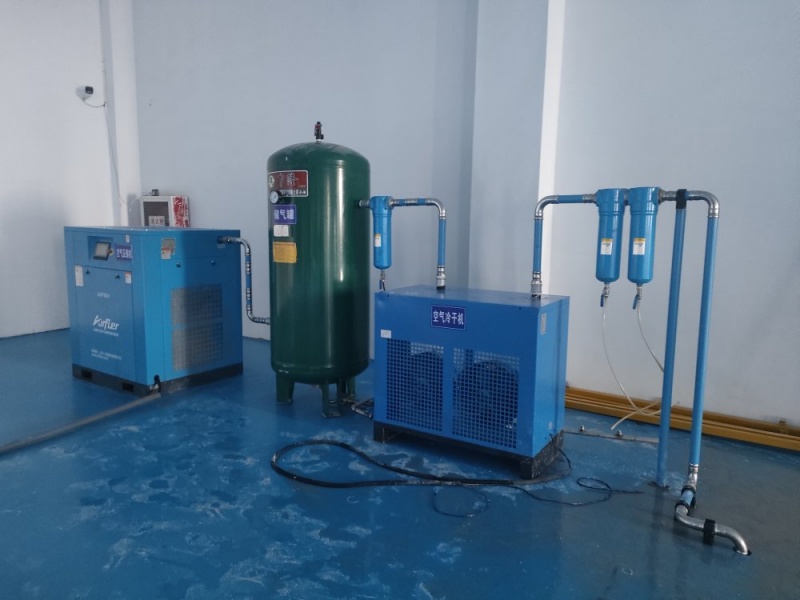
The
application of air compressors in the textile industry1. Power transmission and equipment drive
As a mainstream textile equipment, the jet loom relies entirely on compressed air to drive the working process. The stable airflow generated by the air compressor guides the weft yarn shuttle through the nozzle, directly affecting the fabric uniformity and production efficiency. In addition, the air twisting joint of the automatic winding machine and the network doting process of the loading machine require compressed air to provide power.
Oil free screw air compressors have become the preferred configuration for textile workshops because they can avoid oil pollution to the yarn.
2. Process quality control
2.1 Printing and dyeing process: Compressed air is used to drive the dye nozzle to ensure uniform dyeing. The Class 0 oil-free air provided by the magnetic levitation air compressor can eliminate color difference problems caused by oil stains penetrating.
2.2 Yarn processing: High pressure airflow is used to remove fiber impurities, adjust yarn tension and humidity. The pure air generated by the water lubricated screw air compressor can improve the surface smoothness of the yarn and reduce the defect rate.
2.3 System energy-saving and stability optimization
The power consumption of
air compressors in textile factories generally accounts for one-third of the total electricity consumption of the factory. The new magnetic levitation air compressor uses direct drive technology and intelligent speed regulation, saving more than 1/5 of energy compared to traditional models. The combined air compressor system achieves on-demand gas supply through multi machine linkage control, with pressure fluctuations controlled within ± 0.01MPa to avoid defects caused by unstable air pressure in textile machines.
Requirements for
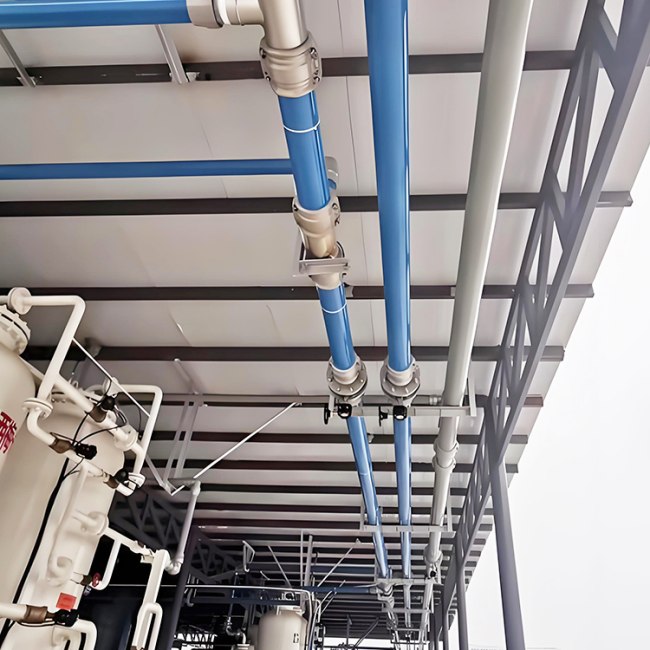
air compression technology in the textile industry1. Compressed air standards
Compressed air used in textiles must meet the ISO8573-1 CLASS 0 oil-free standard, with a dust content of ≤ 1mg/m ³ and a dew point temperature of ≤ -40 ℃.
2. Permanent magnet frequency conversion upgrade technology
The permanent magnet frequency conversion technology reduces energy consumption by up to one-third, and the IP55 protection level is suitable for high dust environments in textile workshops.
3. Intelligent remote monitoring enables predictive maintenance and reduces unplanned downtime losses.

